
shop now
book classes
Master the Markets
shop now
book classes
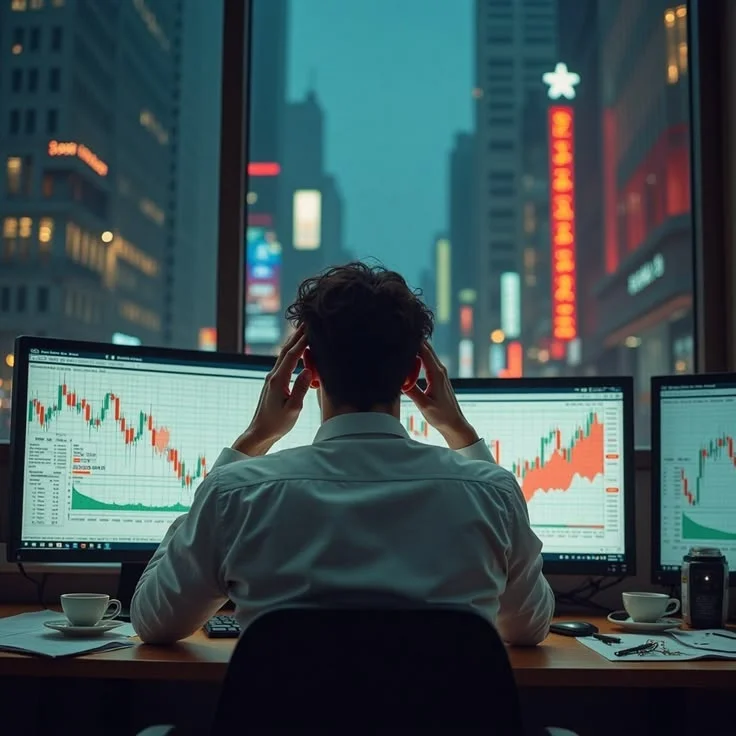
Emotional trading is one of the biggest reasons traders lose money, even when they have good strategies. Fear, greed, impatience, and frustration quietly influence decisions and slowly break discipline. When emotions take control, traders stop following plans and start reacting to outcomes. Losses then become emotional rather than technical. Over time, this behavior damages both capital and confidence. Understanding emotional trading is the first step toward consistent decision-making.
Most traders believe emotions only appear after a loss, but they are present even before entering a trade. Fear can cause hesitation, missed opportunities, or early exits. Greed often appears after winning trades and pushes traders to increase risk unnecessarily. Impatience leads traders to take trades that do not meet their rules. These emotions influence decisions subtly but consistently. Without awareness, traders confuse emotional reactions with market logic.
Fear usually shows up after losing a trade or during high market volatility. Traders begin doubting their analysis and avoid valid setups. Greed appears after profits and convinces traders that more trades mean more money. This emotional swing creates inconsistency in execution. So, traders stop following rules and start chasing outcomes. Over time, this cycle leads to unpredictable performance.
After a loss, many traders feel pressure to recover money quickly. This emotional response leads to revenge trading and overtrading. Trades are taken without proper analysis or confirmation. Each impulsive trade increases both risk and stress. Losses then grow larger than planned. What started as a single loss turns into a damaging emotional spiral.
Emotions become harder to control when risk is too high. Traders who risk more than they can emotionally tolerate panic during normal market movements. Proper risk management creates emotional stability. Also, smaller, controlled losses are easier to accept. This allows traders to stay calm and objective. Risk management is not just a technical rule, but an emotional safety system.
Professional traders do not eliminate emotions, but they control their actions. Discipline allows traders to follow rules even when emotions are present. A clear trading plan removes impulsive decisions. Structure tells traders when to enter, exit, or stay out. This reduces emotional interference significantly. So, consistency is built through discipline, not motivation.
Emotional control is a skill that develops with structure and experience. Traders who learn in an unstructured way repeat emotional mistakes for years. Structured education teaches traders how to respond, not react. It creates awareness around emotions and decision-making. Over time, traders trust their process instead of feelings. This shift changes trading from stressful to
professional.
Emotional trading is not a sign of weakness; it is a human response to uncertainty. Every trader experiences emotions at some stage of the journey. The difference lies in how those emotions are managed. Traders who build discipline, structure, and risk control reduce emotional damage. This leads to clearer decisions and better consistency. Mastering emotions is what protects capital in the long run.
Yes, emotional trading is very common among beginners because they are still learning how to handle uncertainty, risk, and losses.
Yes, even profitable traders experience emotions, but they rely on rules and discipline to prevent emotions from controlling decisions.
Emotions never fully disappear, but experience and structure reduce their impact significantly.
Reducing risk, following a trading plan, journaling trades, and focusing on process over profit help control emotions.